
Social Media
15 Social Media Management Myths That Are Hurting Your Brand

There’s a version of social media strategy that still lives inside a lot of enterprise playbooks, and it looks something like this: post consistently, respond quickly, track the likes, repeat. It’s not wrong, exactly. But it describes a platform ecosystem that no longer exists.
The shift didn’t happen overnight, and it didn’t announce itself with a press release. But if you’re paying attention, really paying attention, the evidence is everywhere. Audiences have reorganized themselves around where they feel seen, heard, and genuinely served. The brands that understand this are thriving. The ones operating from a 2019 playbook are quietly losing ground.
At Social Factor, we’ve spent over a decade inside these platforms, managing communities, moderating conversations, listening to signals, and building strategies for some of the world’s most recognized brands. What we’re seeing right now is not a typical algorithm shift or content format trend. It’s a fundamental restructuring of where engagement happens, how it happens, and what it actually means for your brand.
In the early days of social media, the promise was reach. Brands raced to accumulate followers, grow pages, and push content into feeds. Engagement was a vanity metric, a count of thumbs-up icons that felt good in the quarterly report.
That era ended. Not with a crash, but with a slow and steady shift in audience behavior. People began to tire of curated corporate content filling their feeds. They migrated toward platforms, formats, and communities that felt real, immediate, and human. And they got very good at filtering out brands that weren’t earning their attention. We saw this coming and unpacked what it means in our piece on the future of social media marketing.
“The question is no longer ‘how do we reach our audience?’ It’s ‘are we showing up in the spaces where our audience has already chosen to spend their time and are we bringing something worth their attention?’”
– Social Factor Strategy Team
Deloitte’s 2025 Digital Media Trends research reinforced just how profound this shift has become. Their survey of U.S. consumers found that people now average six hours of daily media and entertainment time, but that number isn’t growing. Every minute a brand fails to earn is a minute won by a competitor, a creator, or a community. Social video platforms, streaming, gaming, and private messaging are all competing for the same finite attention.
The implications for enterprise brands are significant: you’re not just competing with other brands for attention. You’re competing with everything.
The platform landscape has matured in ways that defy simple summaries. What the data shows us, and what we see operationally every day, is that engagement is stratifying sharply by platform purpose, not just platform size.
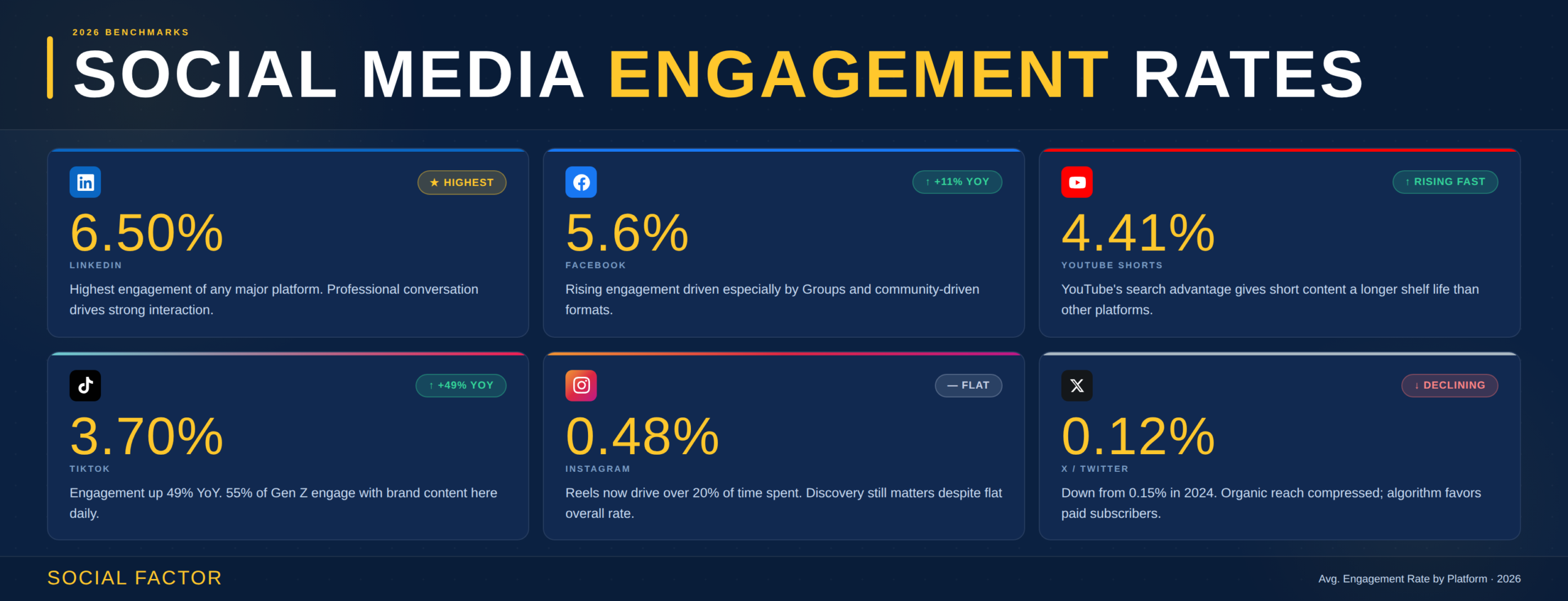
Our insights & analytics teams watch these signals closely. (For a vivid real-world example of how this plays out under pressure, see what the 2026 Big Game revealed about live engagement and social strategy.) Here’s what the data is telling us right now:
 Sources: Buffer State of Engagement 2026; Sprout Social Statistics Report 2026; Social Insider 2026 Benchmarks
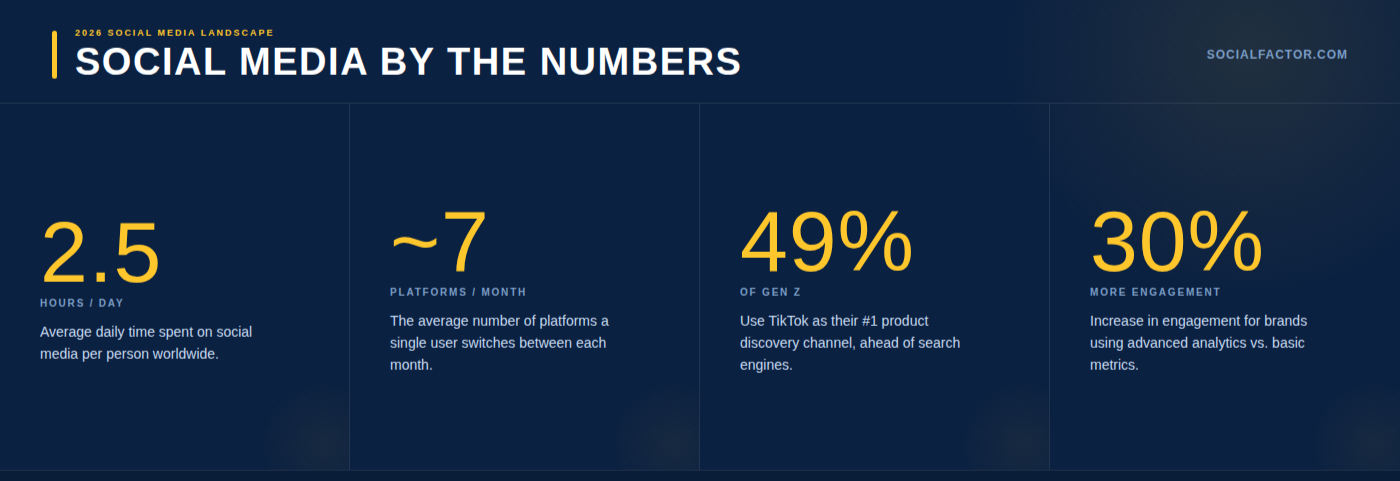
The story these numbers tell is not “platform X is dead, use platform Y.” It’s more nuanced than that, and more interesting. Different platforms are serving fundamentally different audience intentions. LinkedIn users are leaning in to learn. TikTok users are actively searching for answers like restaurant recommendations, product reviews, and cultural commentary. Facebook communities are creating belonging at scale. YouTube is building intent-driven audiences who return again and again.
That’s why a one-size-fits-all content strategy is one of the most expensive mistakes an enterprise brand can make. And without the right measurement infrastructure behind it, you’re flying blind across all of them, something we cover in depth in our guide to the best analytics tools for social media management.
 Sources: Sprout Social Statistics Report 2026; Social Insider 2026 Benchmarks
Here’s what the aggregate engagement statistics don’t capture: a growing portion of the most meaningful brand interactions aren’t happening in public feeds at all.
Audiences are moving to private groups, Discord servers, branded communities, DMs, and closed channels. These spaces are where people share real opinions, ask vulnerable questions, and make actual purchase decisions. It’s what researchers often call “dark social”. This is where interactions that don’t show up in your standard analytics dashboard live, but are often more predictive of brand loyalty than any public metric. It’s also why the environment inside your owned communities matters more than ever, a dynamic we explored in our post on brand stewardship in the era of social media addiction lawsuits.
Hootsuite’s 2026 Social Trends research captured this shift clearly: social platforms are increasingly becoming sources of consent-based first-party data, with direct signals coming through lead gen, gated content, live events, and DMs. Brands that know how to listen to these signals, and respond to them in real time, are building the kind of intelligence that transforms social from a cost center into a growth engine.
This is precisely why social listening has moved from a “nice to have” to a non-negotiable operational capability. When conversations happen in private spaces or in the comment threads of niche creators, only a sophisticated listening infrastructure catches them.
There is an irony sitting at the center of social in 2026: just as AI is making it easier than ever to generate content at scale, audiences are craving authenticity more urgently than ever. Hootsuite’s trends data notes that in 2025, AI-generated content surpassed human-written content online for the first time. The result? Audiences have become remarkably good at detecting the generic, the hollow, the algorithmically optimized.
The brands cutting through the noise are not necessarily the ones with the biggest budgets or the most sophisticated AI stacks. They’re the ones showing up as genuinely human, responding personally, engaging in real conversations, and managing their communities with care and context.
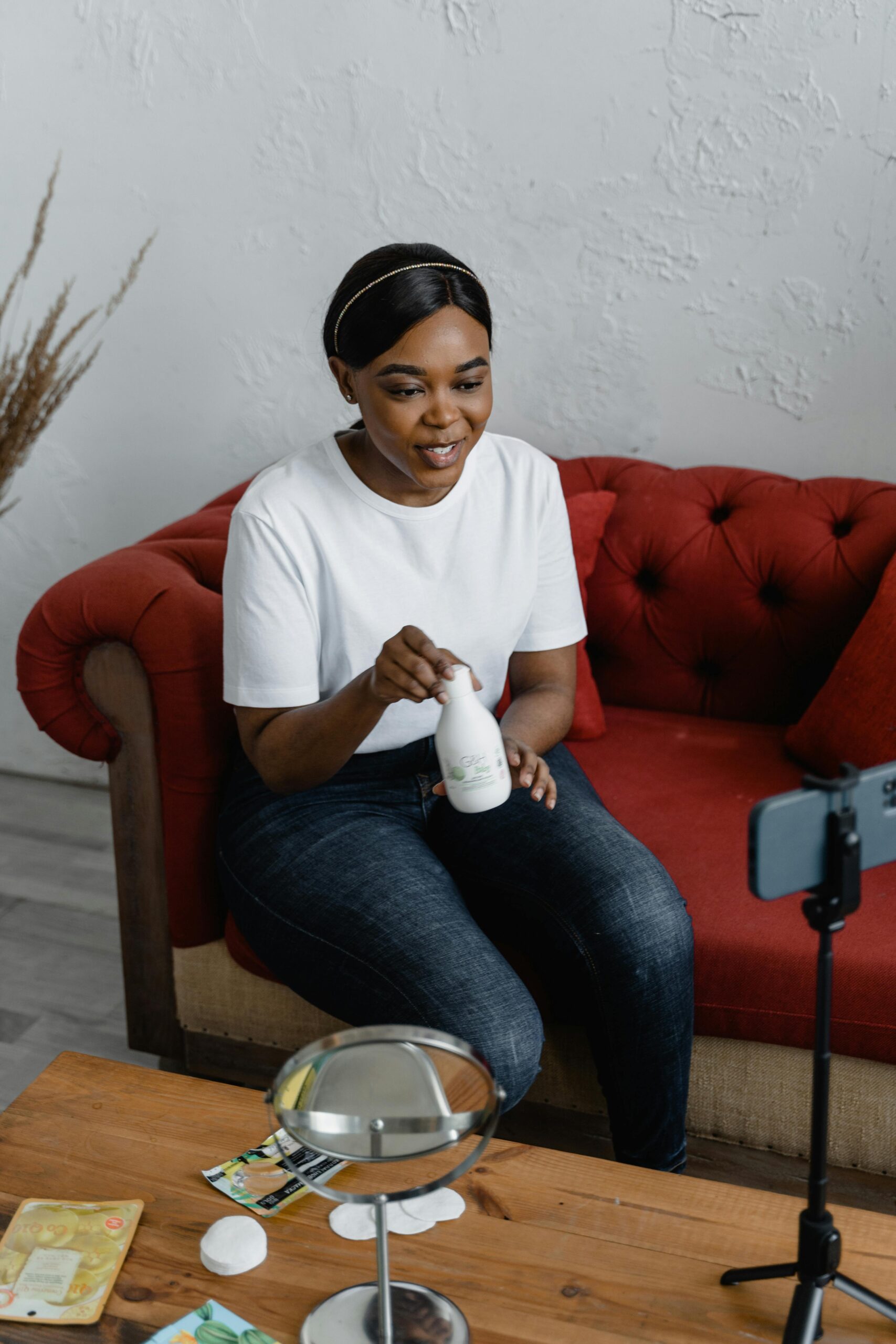
Research on social trends found that 76% of brands report sponsored content with creators outperforms traditional advertising, precisely because creators bring a voice that audiences recognize as real. If you’re thinking about how creator partnerships fit into your brand strategy, our breakdown of how to choose the right influencer for your brand is a good starting point. That same authenticity premium applies to how brands manage their owned communities.
This is not a problem AI solves. It’s a problem that thoughtful, expert human community management solves, at scale.
“Audiences trust people more than they trust faceless brands. The brands winning in 2026 are the ones that show up like humans — not like content machines.”
– Hootsuite Social Trends 2026
At Social Factor, this is the work we’ve been doing since 2011. Our community management teams operate 24/7/365, not just responding to comments, but fostering genuine connection, de-escalating sensitive conversations, and knowing when a human response carries weight that no automation can replicate. We’ve written extensively about what this looks like at scale in our guide to community management best practices for global brands managing millions of fans. We’ve helped those brands navigate conversations on racial identity, mental health, safety crises, and cultural moments because context is everything, and getting it wrong costs more than the engagement you’re optimizing for.
One of the most persistent misconceptions we encounter is treating platform management as a technical task separate from brand strategy. In reality, the two are now inseparable.
The platforms themselves are changing rapidly. Instagram’s discovery engine now pushes content far beyond your existing followers. Social Insider’s 2026 benchmark data confirms that on TikTok, users don’t just passively scroll, they’re actively searching, using the platform the way a previous generation used Google. LinkedIn has introduced video features that are attracting a younger, more engaged audience and opening new doors for professional storytelling. Newer entrants like Threads and Bluesky continue to mature, so we took a close look at how the microblogging landscape is evolving and evaluated which platforms are the right fit for our brand.
Knowing how to configure, structure, and continuously optimize your brand’s presence across these evolving surfaces isn’t a set-it-and-forget-it exercise. It requires dedicated expertise, ongoing testing, and a strategy that’s platform-native, not copy-pasted from channel to channel.
There’s one dimension of the engagement shift that rarely makes it into the trend reports but deserves serious attention: as online spaces have become more central to people’s lives, the stakes of what happens inside those spaces have risen dramatically.
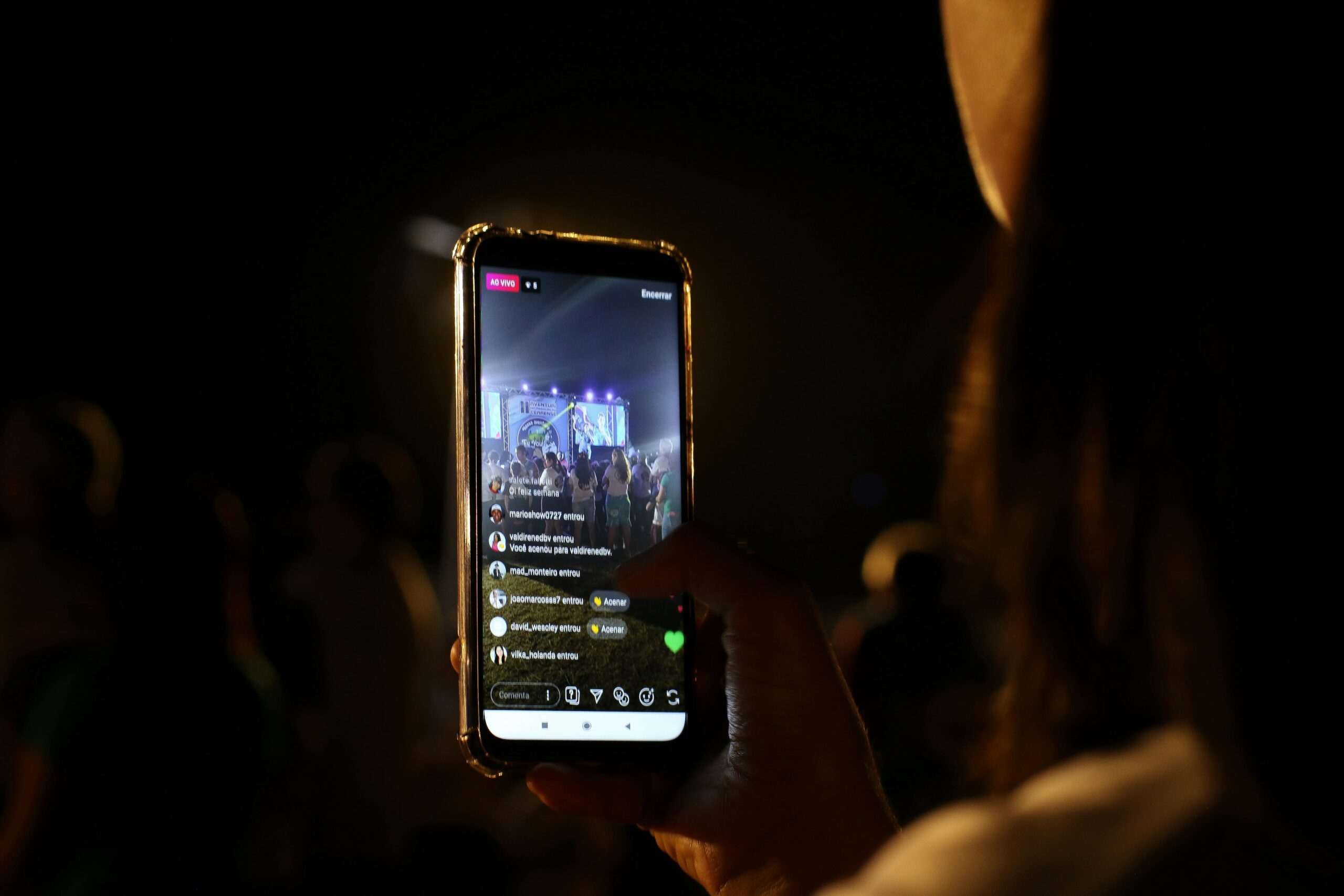
Harmful content, bad actors, coordinated manipulation, brand impersonation, crisis escalation, these are not edge cases anymore. They are routine conditions that every enterprise social presence operates under. And the brands that treat moderation as a back-of-house cost center rather than a front-line brand experience are paying the price in lost trust.
Effective social media moderation is what keeps communities safe, keeps brand conversations productive, and keeps your audience coming back. It’s the foundation that all other engagement sits on. You can’t build a connection on top of chaos.
Our moderation teams have managed some of the most sensitive and complex conversations on the internet, across languages, time zones, cultural contexts, and crisis scenarios. We know that moderating a conversation about product quality is fundamentally different from moderating a conversation that touches mental health, political tension, or public safety. (For a look at just how real those stakes can get, read our guide on how brands can navigate pre-election chaos on social media.) And we train accordingly.
The engagement has already moved. The audience has already reorganized. The platforms have already evolved. None of this is speculative. It’s an operational reality for any brand managing a meaningful social presence today.
What’s still a choice is whether your brand evolves alongside it.
The enterprise brands we work with that are winning right now share a few things in common: they treat their social communities as owned assets worthy of genuine investment. They use listening intelligence to get ahead of cultural moments and customer needs. They’ve built governance frameworks that let them move fast without breaking trust. And they have partners who understand the full operational complexity of social at scale, not just the content calendar.
That’s what we do at Social Factor. We specialize in global social media operations for enterprise brands, from community management and content moderation to social listening and platform implementation. We make sure your brand is always protected, always connected, and above all, always human.
The audience has moved. Let’s make sure your brand is there to meet them.

15 Social Media Management Myths That Are Hurting Your Brand

How Social Listening Predicts Crises Before They Happen

From Attention to Engagement: The Sports Marketing Playbook

AI in Social Media Marketing: Scaling Engagement Without Losing Authenticity
How Reddit’s API Changes Are Reshaping Social Listening

How Coachella 2026 Turned the Internet Into the Front Row
Social Media Engagement in 2026: What the Data Reveals
Moderation: The Critical Blindspot in Live Online Events

Future-Proofing Your Social Strategy in 2026: AI, Trends, and the Return of Judgment

Community Management Best Practices for Global Brands Managing Millions of Fans